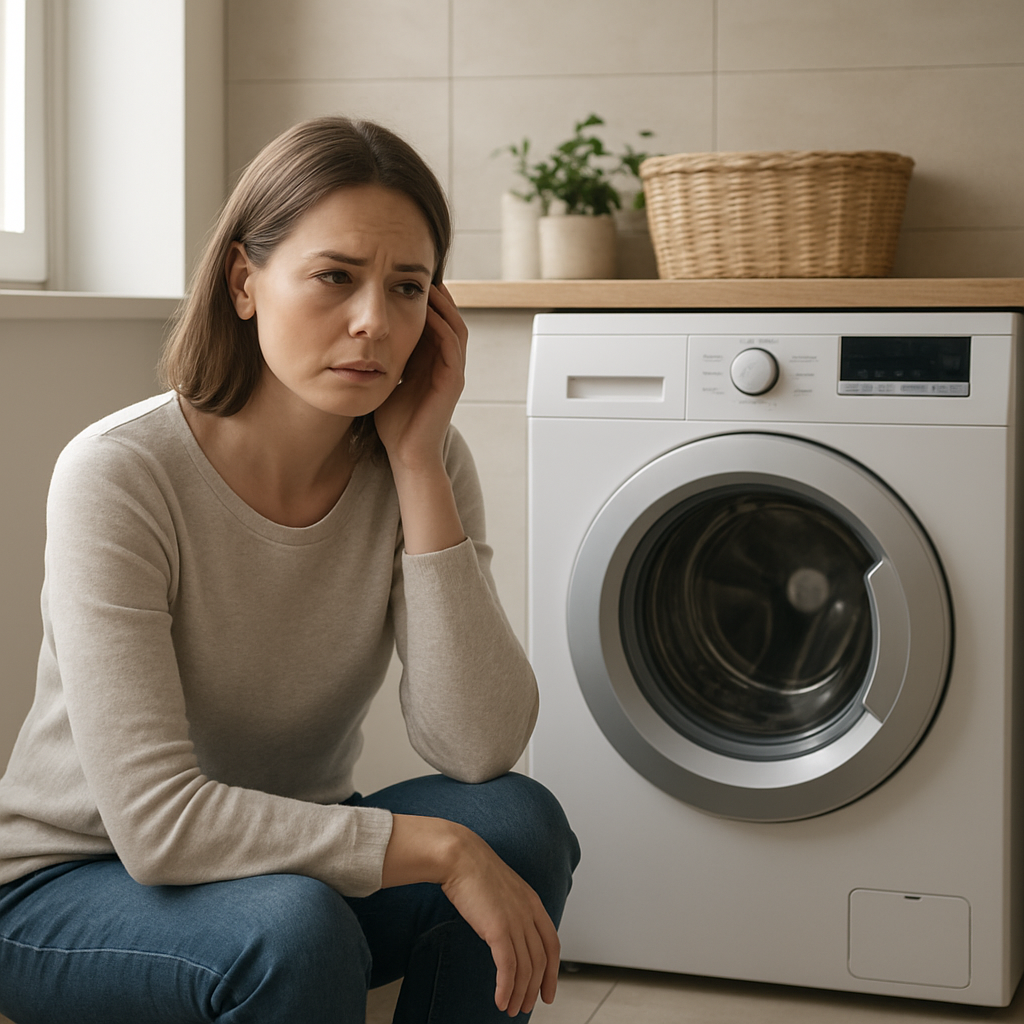
Washing Machine Noise With Burning Smell? What to Do Immediately
Quick Answer
A washing machine making noise with a burning smell is usually a slipping drive belt, overheating motor, failing bearing, or an electrical component overheating. Stop the cycle, unplug the washer, and keep the lid or door closed. Do not run it again to test. If you see smoke, hear crackling, or smell a sharp electrical odor, shut off power at the breaker and call for service.
Identify the Noise First
Use this to pinpoint what is most likely overheating. The timing of the noise matters as much as the smell.
During spin: loud rumble, roaring, helicopter-like sound, or high-pitched squeal. Burning smell often follows hard spinning or a heavy load.
During drain: buzz, grinding, or rattling as water leaves. Smell may be hot rubber/plastic if the pump is struggling and heating.
During fill: humming with no water flowing, or a vibrating noise at the wall. Smell here is less common and raises concern for an electrical issue or a stuck valve coil.
Constant (even when paused): fan-like hum, whine, or buzzing that continues after you stop the cycle. Treat as higher risk because something may be powered and overheating.
Intermittent: noise and smell come and go, often when the motor starts under load. This pattern fits belt slip, a failing motor start device, or a tight bearing.
Match the smell as well: hot rubber usually points to belt or friction; hot plastic can be a slipping component, pump housing heat, or wiring insulation; sharp electrical smell suggests overheating wiring, control, motor, or capacitor.
What This Noise Usually Means
Noise plus burning smell means a part is creating heat it should not. In a washer, that heat usually comes from friction or electrical resistance.
Friction heat: a belt slipping on a pulley, a seized pump impeller, a tight drum bearing, or something rubbing the tub. Friction typically creates a hot rubber or hot plastic odor and often gets worse during spin.
Electrical heat: a motor struggling and drawing high current, a failing capacitor, a loose connection, or a control component overheating. This often comes with a harsher electrical smell and may appear as buzzing or humming.
The emergency risk is that overheating can damage wiring, melt components, or in rare cases lead to smoke. Treat the first incident as a stop-and-check event, not something to push through.
Most Common Causes
Slipping or misaligned drive belt (belt-driven units): squealing or chirping during agitation or spin, with a hot rubber smell.
Failing drum bearings: growling/roaring in spin that gets louder over time; motor works harder, generating heat and odor.
Drain pump jammed or failing: buzzing/grinding during drain; pump can overheat if the impeller is obstructed.
Motor overheating or failing start components: humming, clicking, or a burning electrical smell when the motor tries to start under load.
Object rubbing the tub or drum: scraping or rhythmic rubbing; heat can build where plastic or rubber is being abraded.
Loose electrical connection or failing control/relay: intermittent buzzing or crackling with a sharp electrical odor, sometimes strongest near the rear control area.
How to Check Safely
These checks are aimed at safety first. Do not bypass lids, panels, or interlocks to keep the machine running.
1) Stop and isolate power: press pause/cancel, then unplug. If the smell is strong or you saw any smoke, turn off the washer circuit at the breaker.
2) Do a quick heat and odor check (no tools): wait 5 minutes, then smell around the back panel, lower front area (pump), and top/rear control area. A strong burnt-electrical odor near the control area is a do-not-run condition.
3) Check for obvious friction clues: look for black dust or smears under the washer (belt rubber), melted plastic bits, or a shiny rubbed spot around the door boot (front-load).
4) Inspect the drum movement by hand:
Front-load: rotate the drum slowly. It should feel smooth and quiet. Grinding, roughness, or tight spots suggest bearing or rubbing.
Top-load: with lid open, rotate the basket. It should not bind or screech.
5) Check the drain pump area for blockage:
Front-load: if your model has a pump filter access door, place towels down, drain any water per the manual, and check the filter for coins, pins, or debris.
Top-load: if you cannot access the pump filter without opening the cabinet, stop here and plan for service.
6) Check for overloading as the trigger: if the washer was packed tight or had a single heavy item, remove items and do not restart until the smell source is identified. A struggling motor can overheat quickly under severe load.
7) Look at the outlet and plug: discoloration, melting, or a hot-to-touch plug/outlet indicates overheating at the connection. Keep power off and call an electrician or technician.
Do not do these tests: do not run a short cycle to see if it happens again, do not sniff inside panels with power on, and do not keep resetting breakers if they trip.
When This Is Normal vs A Problem
Sometimes normal (short-lived, mild, and not repeated):
A faint hot rubber smell on the first few uses of a new washer or newly installed belt, without abnormal noise.
A brief warm odor after a heavy hot-water cycle, as the machine dries out, if there is no burning smell and no unusual sound.
A problem (treat as urgent and do not run):
Any sharp electrical smell, burning insulation odor, or smell that lingers after unplugging.
Smoke, haze, crackling sounds, or visible melting.
Noise plus smell that appears specifically during spin or when the motor starts.
Repeated breaker trips, the plug/outlet getting hot, or the washer stopping mid-cycle with a burning odor.
Grinding/roaring in spin that is getting louder over multiple loads.
When to Call a Technician
Call immediately if you had smoke, a strong electrical odor, crackling, melted plastic, a hot plug/outlet, or a breaker trip. Leave it unplugged and off at the breaker until inspected.
Call soon if the drum feels rough to rotate, there is loud bearing-type noise in spin, or the odor returns whenever the motor runs. Continued use can damage the motor, belt, or wiring.
Service is recommended if the drain pump is buzzing/grinding and you cannot access and clear the filter safely, or if water remains in the tub and the pump area smells hot.
Stop DIY if your inspection requires removing panels and you are not comfortable verifying power is fully isolated.
How to Prevent This Problem
Do not overload: heavy loads and single bulky items increase motor load and belt slip, which raises heat quickly.
Empty pockets and use garment bags: coins, screws, and bra wires commonly jam pumps and create grinding with overheating.
Clean the pump filter regularly if your model has one, especially if you wash pet items or small rugs.
Keep the washer level: excessive vibration during spin accelerates belt wear and bearing stress.
Address new noises early: a washer that just started squealing or roaring is often cheaper and safer to repair before it overheats something else.
Use the correct outlet: avoid extension cords; poor connections can heat up under washer load.
Related Washing Machine Noise Problems
Loud grinding during drain but no burning smell: often a foreign object in the pump or a failing impeller.
Squealing only at the start of spin: commonly belt slip or a tension/idler issue on belt-driven washers.
Roaring or airplane sound in high-speed spin: classic bearing wear, sometimes mistaken for an unbalanced load.
Buzzing or humming and the drum will not turn: motor start capacitor or seized mechanical load; can overheat quickly.
Scraping noise with a burning rubber smell on a front-load: door boot rubbing or an item trapped between tub and drum.
Conclusion
Noise with a burning smell is a stop-and-isolate situation because it points to friction or electrical overheating. Unplug the washer, identify whether the noise happened during spin, drain, or fill, and check for obvious belt dust, pump blockage, rough drum rotation, or outlet heat. If the odor is electrical, the plug/outlet is hot, or the noise returns with motor operation, keep it off and schedule service.
Frequently Asked Questions
My washer smells like burning rubber during spin. Is it safe to finish the cycle?
No. Burning rubber during spin usually means belt slip or another friction point. Stopping prevents belt damage and reduces overheating risk. Unplug the washer and look for black rubber dust under the machine or a squealing noise pattern that matches spin starts.
The washer buzzes during drain and then I smell something hot. What should I check first?
Unplug it and check for a clogged pump filter if your model provides safe access. A jammed pump can buzz and overheat. If you cannot access the filter without opening panels, do not run it again; schedule service to prevent pump or wiring damage.
It smells electrical, not rubber. What does that indicate?
A sharp electrical smell suggests overheating wiring, a loose connection, a failing motor component, or a control/relay issue. Keep power off at the plug or breaker. Do not keep testing cycles. Electrical odor with any crackling, smoke, or heat at the plug/outlet requires professional inspection.
Can an unbalanced load cause a burning smell?
An out-of-balance load usually causes banging and vibration, not a burning smell. However, severe imbalance can force the drive system to work harder and can contribute to belt slip or motor overheating. If you had both loud banging and a burning odor, stop and investigate rather than redistributing and restarting.
After I unplugged the washer, the smell lingered for hours. Does that matter?
Yes. A lingering burnt odor often means something overheated enough to discolor or melt insulation, plastic, or rubber. Do not use the washer again until the source is identified and repaired, especially if the smell is strongest near the rear control area or power cord connection.
When the noise stops and the path is clear, it’s almost boring—in the best possible way. The fix isn’t flashy, but it lands where it should, right in the middle of that nagging uncertainty.
With that settled, there’s room to move again, not just through the problem, but past it. The world doesn’t feel dramatic, yet everything feels a little lighter.