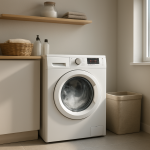
Often, yes. A washing machine can sound louder when the drum is empty because there is no laundry to dampen vibration and absorb sound, especially during spin and drain. First action: run a quick rinse and spin with 3 to 5 towels. If the noise drops noticeably, it is usually normal empty-drum behavior. If it stays harsh or includes grinding or banging, treat it as a fault and inspect further.
Identify the Noise First
Empty-drum noise diagnosis starts with when it happens. Use this guide and match the sound to the cycle:
During spin (ramping up or full speed): loud humming/airplane-like roar, vibration, or a rhythmic thump that gets faster with speed.
During drain (often before spin): loud buzzing/whirring, rattling, or a growling sound for 10 to 60 seconds while water pumps out.
During fill: hissing, hammering, or a loud rushing noise at the start of fill.
Constant (whenever motor runs): steady mechanical hum that does not change much with speed or load.
Intermittent: short rattles or ticks that come and go, often tied to drum rotation direction changes.
Next, confirm whether it is truly empty-drum behavior: does the same cycle get noticeably quieter with a small load of towels?
What This Noise Usually Means
An empty drum is a worst-case scenario for noise because there is nothing inside to act as sound insulation or to smooth out small imbalances. On many machines, the suspension and motor control are tuned expecting some load. With no laundry, you can hear normal mechanical sounds more clearly: airflow noise from rapid drum movement, belt or motor hum, pump noise during drain, and cabinet vibration. This becomes abnormal when the machine cannot control movement, or when a worn part creates metal-on-metal or severe rattling that a load does not mask.
Most Common Causes
Normal empty-drum amplification: the same machine sounds louder with no towels to dampen vibration, especially on high-speed spin.
Drain pump noise more noticeable when empty: a pump can sound harsh with little water left, or if it briefly cavitates as it finishes draining.
Minor cabinet rattle: loose rear panel, lid top, or hose tapping the cabinet becomes obvious without the mass of laundry.
Shipping bolts not removed (front loaders): very loud, rigid vibration and knocking, often worst on spin and even with a load.
Out-of-level machine: empty drum allows more vibration; with a load it may still be present, but you notice it less.
Foreign object in drum or pump area: coin, bra wire, screw, or debris causing scraping/ratcheting, usually persists loaded or empty.
Worn suspension components: shocks/struts, springs, or dampers allow excessive tub movement, often thumping on spin.
Bearing or pulley noise: low rumble or growl that follows drum speed and does not improve with towels.
How to Check Safely
These checks focus on confirming normal empty-drum behavior versus a real mechanical issue.
1) Do the towel test: Run a rinse and spin with 3 to 5 bath towels. Compare sound level to empty. A clear drop in noise points to normal damping behavior.
2) Confirm spin-only behavior: If your model allows it, run a spin cycle with the machine empty, then repeat with towels. Note whether the noise appears only at high RPM or also at low-speed tumbling.
3) Listen at the right time: If the noise happens mainly at the start of spin, watch for the drain phase first. A loud buzz during drain is usually the pump, not the drum.
4) Check for cabinet contact: With the machine off, gently push the drum/tub (front loader: through the door opening; top loader: push down on the basket rim if accessible). It should move smoothly and return without clunking against the cabinet.
5) Inspect for simple rattles: Ensure the unit is not touching a wall, dryer, or cabinet. Check that fill hoses and the drain hose are not tapping the back panel.
6) Level check: Verify all feet are firmly on the floor and the machine does not rock. Re-level if needed according to your manual.
7) Pump filter check (if accessible): Unplug the washer, place towels, and open the pump filter access. Remove lint, coins, and debris. A rattling drain noise that improves after cleaning often points here.
8) Front loader shipping bolts check (if recently installed): If the unit is new or moved, confirm shipping bolts/spacers were removed. If unsure, stop using high-speed spin until verified.
When This Is Normal vs A Problem
Usually normal:
Noise is mainly during high-speed spin when empty and is noticeably quieter with towels.
A brief louder pump sound at the end of draining, with no grinding and no recurring error codes.
Light cabinet vibration that does not move the washer across the floor.
Likely a problem:
Grinding, scraping, or metal-on-metal sounds that do not change with a towel load.
Loud banging or repeated thudding that makes the machine walk, even when leveled and with towels.
Rumbling that steadily worsens over time and tracks drum speed (often more than empty-drum amplification).
Drain noise that is harsh throughout the entire drain phase, especially if draining is slow or you see water remaining.
New installation with severe vibration on the first spins (shipping restraints highly suspected on front loaders).
When to Call a Technician
Skip DIY and call if you hear grinding, burning smells, or the drum feels rough/jerky when turned by hand.
Call if the washer bangs violently on spin even after leveling and the towel test, suggesting suspension or control issues.
Call if you suspect bearing or spider arm problems (deep rumble, worsening over time, noise unaffected by load).
Call if the machine is new and extremely loud on first use and you cannot confirm shipping bolts were removed correctly.
Call if the drain pump still screams or rattles after filter cleaning, or the washer drains slowly.
How to Prevent This Problem
Avoid running high-speed spin completely empty unless the manual specifically recommends it (some cleaning cycles are exceptions).
Use a small towel load for test spins when diagnosing noise; it gives a realistic baseline.
Keep the pump filter clean and check pockets to reduce debris-related rattles.
Maintain a stable installation by leveling after moving the washer and ensuring it does not touch nearby surfaces.
Use appropriate spin settings if your floor is flexible; excessively high RPM can make normal empty-drum noise sound dramatic.
Related Washing Machine Noise Problems
Loud spinning only with a heavy load: points more toward out-of-balance loads or weak suspension, the opposite of empty-drum amplification.
Rattling during drain but quiet during spin: commonly pump filter debris or a loose pump impeller.
Thumping on spin after moving the washer: often leveling issues or shipping bolts left in place (front loader).
Scraping sound as the drum turns by hand: can indicate a foreign object between drums or a failing bearing, not normal empty behavior.
High-pitched squeal at the start of spin: commonly belt slip or motor/pulley noise, typically not load-dependent.
Conclusion
A washer sounding louder when empty is often normal because the drum has no load to dampen vibration and mask pump and motor noise. Confirm it with a towel test and pay attention to whether the sound is tied to spin or drain. If the noise stays harsh with towels, includes grinding or banging, or the washer shakes violently, stop chasing empty-drum explanations and move to inspection or a technician visit.
Frequently Asked Questions
Why does my washer sound like a jet engine when it is empty?
High-speed spin creates strong airflow and vibration that laundry normally muffles. If the sound is mainly a steady roar that rises with RPM and becomes noticeably quieter with a few towels, it is typically normal empty-drum amplification.
Is it bad to run a spin cycle with no clothes?
Occasionally is usually fine, but it is not ideal for noise and vibration, and it can exaggerate small rattles. If you are testing or troubleshooting, use a few towels so the machine behaves more like it does in normal use.
My washer is loud when empty and also loud with towels. What does that suggest?
If the towel test does not reduce the noise, it is less likely to be normal empty-drum behavior. Focus on the specific phase: pump/filters for drain noises, leveling and suspension for banging, and bearings/pulleys for rumbling tied to drum speed.
Why is the drain sound louder when the drum is empty?
With little water, the pump noise is less muffled, and the pump can sound harsher as it finishes and briefly runs with minimal water flow. If it is rattly or grinding, check the pump filter for coins or debris.
Could shipping bolts cause loud noise even when the washer is empty?
Yes. Front loaders with shipping bolts left in place often shake loudly and knock on spin because the tub cannot move correctly. This tends to be severe and does not improve much with towels. If the washer is new or recently moved, verify shipping restraints immediately.
For a moment, the noise fades and the page feels lighter. The problem stops being some looming cloud and turns into something you’ve already handled, even if nobody claps.
There’s a quiet relief in that—like setting a glass down without hearing the dreaded clink. Then the day moves on, slightly more obedient than before.