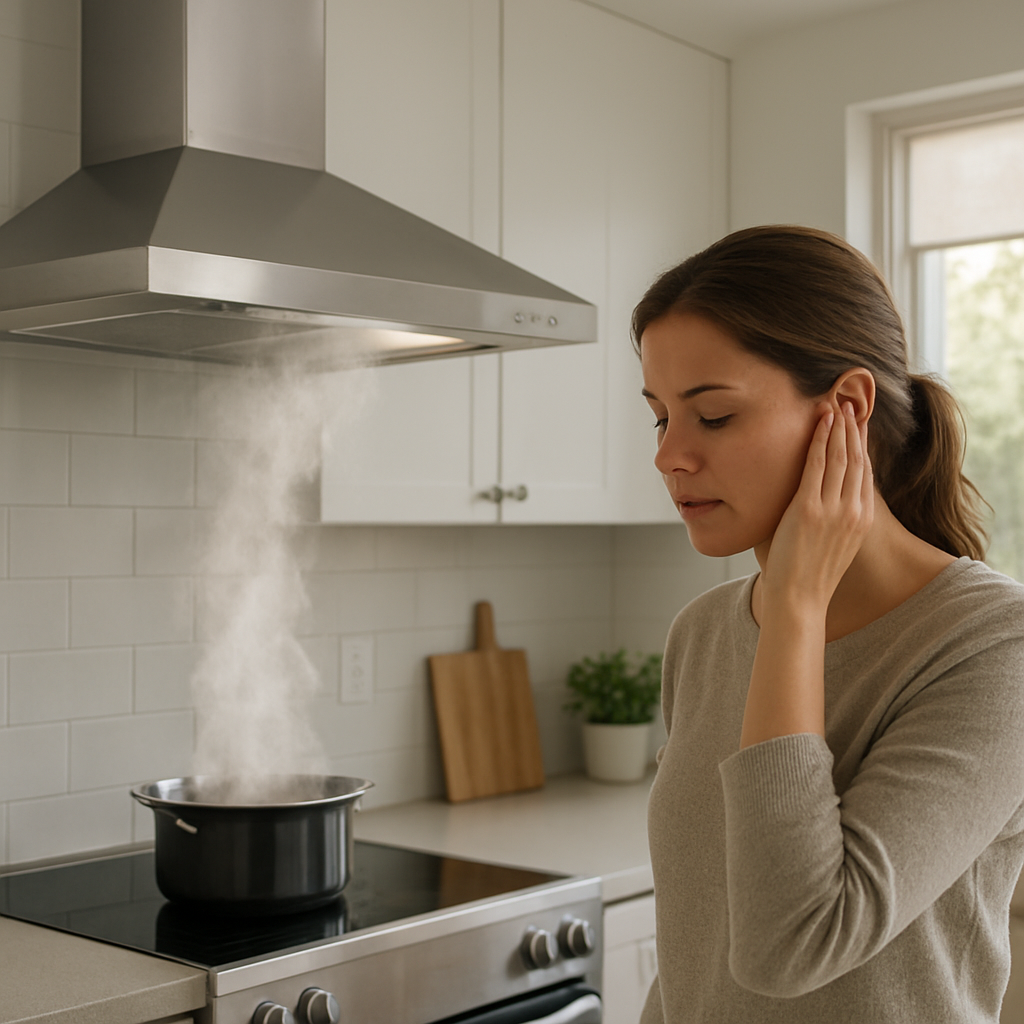
Range Hood Making Loud Noise? Common Causes & Quick Fixes
Quick Answer (Most Likely Cause)
The most common reason a range hood suddenly gets loud is a grease-loaded blower wheel that’s become uneven, or a slightly loose internal blower housing that transfers vibration into the hood body. First action: turn the hood off, remove the filters, and inspect for heavy grease buildup on the blower wheel and any loose mounting screws you can reach without wiring access. If the hood shakes the cabinet or you smell burning, stop using it and schedule service.
Identify the Noise First
Use when-and-how the noise happens to separate vibration from airflow or motor issues:
At startup (first 1–3 seconds): A brief rattle or “clunk” often points to a loose blower housing, loose blower wheel set screw, or a wheel that’s hitting a grease-heavy spot as it spins up.
Steady running (all speeds): A constant rumble or drumming that you feel in the hood shell usually indicates vibration transfer from a loose internal assembly or an imbalanced wheel from grease buildup.
Only on high speed: Grease imbalance and housing looseness get dramatically louder at higher RPM because vibration force increases with speed.
Intermittent (comes and goes): A partially loose bracket or housing can shift with heat and vibration, changing the contact point and the noise.
After installation: More likely a mounting or housing fastener not fully tightened, or a duct/hood connection transmitting vibration.
After cleaning: Filters reinstalled incorrectly can change airflow and create turbulence, but if the sound is a shake/rumble, suspect the blower assembly was bumped or grease was redistributed unevenly.
Speed-specific resonance (one speed is awful, others OK): A loose housing can excite the hood’s metal panels at a specific frequency, making one speed sound much worse.
Structural vibration (cabinet/wall buzzing): Points strongly to vibration transfer from the blower housing or wheel imbalance rather than “bad motor” as a first assumption.
What This Noise Usually Means
A range hood blower wheel is designed to spin evenly. When grease accumulates unevenly on the wheel blades, it acts like a weight stuck to one side of a tire. The wheel becomes imbalanced, causing the motor and housing to vibrate. If the internal blower housing or its mounting screws are even slightly loose, that vibration transfers into the hood shell, cabinet, and duct connection, turning a minor imbalance into a loud, resonant rumble, buzzing, or rattling. The hood may still move air, but noise rises quickly as RPM increases.
Most Common Causes (Ranked by Probability)
Uneven grease buildup on the blower wheel
What happens: Grease collects heavier on certain blades or on one side of the wheel.
Symptom clue: Loud rumble that gets worse on higher speeds; vibration you can feel on the hood.
Why it creates this noise: Imbalance loads the motor shaft and makes the wheel “wobble,” amplifying vibration through the housing.
Loose internal blower housing screws or bracket
What happens: The blower scroll/housing shifts slightly under load.
Symptom clue: Metallic buzz/rattle, often speed-specific; may start after installation or after years of vibration.
Why it creates this noise: Small gaps become contact points; the housing turns vibration into panel resonance.
Loose blower wheel hub or set screw (where accessible)
What happens: The wheel isn’t clamped perfectly to the motor shaft.
Symptom clue: Thumping at startup, then a rough, uneven running sound; sometimes a slight scraping tone.
Why it creates this noise: The wheel runs off-center, multiplying imbalance and letting the wheel shift under load.
Blower wheel rubbing due to grease “drag” or shifted housing
What happens: Grease buildup reduces clearance or the housing shifts, and the wheel lightly contacts the housing.
Symptom clue: A scrape or ticking that changes with speed; may come and go.
Why it creates this noise: Contact turns normal rotation into friction noise and adds vibration with each revolution.
Filter not fully seated after cleaning (adds turbulence that mimics vibration)
What happens: Filter edge or latch sits proud, altering airflow path.
Symptom clue: Louder “whoosh” plus mild rattling at the filter area; touching the filter can change the sound.
Why it creates this noise: Turbulence increases sound pressure; a loose filter can chatter against its frame.
Blocked grease channel or saturated baffles causing pulsating airflow
What happens: Grease traps and channels restrict flow in uneven ways.
Symptom clue: A drumming or pulsation that intensifies on higher speed; airflow may feel weaker.
Why it creates this noise: Restriction creates turbulent eddies that add low-frequency noise and vibration-like sensation.
Duct connection transmitting vibration back into the hood
What happens: Rigid duct or a tight connection acts like a “speaker” for vibration.
Symptom clue: Cabinet/wall buzzing; noise seems to radiate beyond the hood body.
Why it creates this noise: Vibration from an imbalanced wheel or loose housing is efficiently transferred into building materials.
Normal motor hum amplified by a loose housing (secondary effect)
What happens: A normal-level motor hum becomes noticeably louder because the housing or panels resonate.
Symptom clue: A low hum that’s louder than it used to be, especially at one speed.
Why it creates this noise: Loosened fasteners reduce damping; the hood shell amplifies frequencies that were previously contained.
How to Check Safely Before Calling for Service
Turn the hood off and let it cool: Warm grease is easier to smear and can hide buildup patterns; also prevents burns.
Remove and reseat the filters: Confirm each filter is locked in place, flat in its track, and not rattling.
Look for visible grease loading: With filters out, use a flashlight to check the blower wheel area for thick, uneven deposits on blades or the wheel rim.
Check for obvious rubbing marks: Look for shiny scrape lines on the blower housing or near the wheel opening that suggest contact.
Lightly test for loose parts (no force): With the hood off, gently try to wiggle the accessible blower cover/housing and nearby metal panels. Any movement suggests vibration transfer points.
Inspect accessible screws: If you can see mounting screws inside the hood (not behind wiring covers), verify they are snug. Do not remove electrical covers or disturb wiring.
Run a quick “panel touch” test: Turn the hood on briefly. Lightly press on the hood’s underside panel (away from moving parts). If the noise changes, vibration transfer from a loose housing/panel is likely.
Listen at different speeds: Note whether the noise jumps at a specific speed (resonance) or increases smoothly with RPM (imbalance).
Check airflow performance: If the hood is louder but moves less air, grease restriction or heavy wheel loading is more likely.
Confirm nothing is contacting the fan area: Ensure foil, filter tabs, or loose trim pieces aren’t protruding into the blower path.
Document the sound: Record a 10-second clip at each speed to help a technician identify imbalance vs housing rattle quickly.
Normal Operating Sound vs Warning Signs
Normal: A steady airflow “whoosh” that rises predictably with speed, with minimal vibration felt in the hood or cabinet.
Likely needs cleaning/inspection soon: New rumble or drumming, especially on high, but airflow remains acceptable and the hood doesn’t shake the cabinet.
Service recommended: Noise is getting louder over weeks, vibration is noticeable in surrounding cabinetry, or the sound is speed-specific and harsh (buzz/rattle).
Stop using and schedule service: Burning smell, speed instability (fan surges), repeated scraping contact sounds, or the hood visibly vibrates/shifts when running.
When Professional Service Is Recommended
The blower wheel appears heavily grease-caked or you can’t access it for proper cleaning without disassembly.
You suspect the internal blower housing is loose but the fasteners are not accessible without removing covers or the blower assembly.
The wheel shows rubbing marks, wobble, or signs it’s running off-center.
The hood transmits strong vibration into cabinets or the wall even after filters are correctly seated.
The noise persists on all speeds after basic cleaning and inspection, suggesting the wheel needs removal and balancing/cleaning or the housing needs re-securing.
You notice electrical symptoms (speed changes by itself, buzzing that doesn’t change with airflow, or intermittent operation). A technician should confirm wiring, control, and motor condition after vibration sources are addressed.
For built-in range hoods, a qualified appliance repair technician or HVAC/ventilation service company can typically tighten the blower housing, clean the wheel properly, and verify clearances without damaging the hood liner or duct connection.
How to Prevent This Problem
Clean or replace filters on schedule: Grease that bypasses clogged filters ends up on the blower wheel and causes imbalance.
Degrease the hood interior periodically: Keeping the blower area cleaner slows uneven buildup that leads to wheel wobble.
Use the hood consistently at the right speed: Running too low during heavy cooking lets grease linger and accumulate inside the blower path.
Reseat filters carefully after washing: A slightly mislatched filter can rattle and also disrupt airflow patterns.
Check for vibration transfer annually: If accessible, confirm visible interior screws remain snug (no electrical disassembly).
Avoid overloading with aerosolized grease: High-grease cooking without adequate capture accelerates blower wheel fouling.
Address new noises early: Correcting minor housing looseness early helps prevent the hood shell and duct connections from becoming chronic resonators.
Related Fan & Ventilation Noise Problems
Range hood buzzing only on one speed (panel resonance from a slightly loose blower housing)
Range hood rattles after filter cleaning (filter not seated or housing shifted during handling)
Range hood thumps at startup then smooths out (wheel imbalance or loose wheel hub)
Range hood scraping sound that changes with speed (wheel rubbing housing due to grease buildup or shifted scroll)
Range hood “helicopter” or oscillating roar (uneven grease loading on wheel blades)
Range hood vibrates the cabinet doors (vibration transfer from blower housing into mounting surfaces)
Range hood suddenly louder but airflow is weaker (grease restriction loading the blower and increasing turbulence)
Range hood noise worse on high speed only (imbalance force increasing with RPM)
Range hood hum seems louder after installation (housing fasteners not fully tightened, creating amplification)
Range hood makes a tinny metallic buzz (loose internal bracket or thin panel vibrating against the housing)
Range hood sounds like it’s “out of balance” (grease buildup acting as an uneven weight on the wheel)
Range hood noise changes when you press the underside panel (structural vibration transmission, not pure motor failure)
Conclusion
Most loud range hood complaints trace back to two fixable issues: uneven grease buildup throwing the blower wheel out of balance, and a slightly loose internal blower housing amplifying that vibration. Start with safe checks: reseat filters, inspect for visible grease loading, and look for accessible looseness or rubbing clues. If vibration is strong, scraping is present, or internal fasteners aren’t safely accessible, schedule professional service to clean and re-secure the blower assembly correctly.
Frequently Asked Questions
Is it safe to keep using a range hood that’s suddenly very loud?
If it’s just louder airflow, it can often wait for cleaning. If the hood vibrates the cabinet, rattles harshly, scrapes, or produces a burning smell, stop using it and arrange service. Those signs suggest wheel-to-housing contact, loose internal mounting, or overheating from excessive load.
Do I need to replace the motor if the hood is rumbling?
Usually not. A rumble that increases with speed is more often blower wheel imbalance from grease or a loose blower housing transferring vibration. Motor replacement is typically considered only after the wheel is cleaned/balanced and the housing is secured, and the noise still persists.
What’s a temporary fix if I need to cook tonight?
Reseat the filters and run the hood at the lowest speed that controls smoke without causing severe vibration. Avoid high speed if it triggers cabinet-shaking resonance. If you hear scraping, don’t run it until a technician inspects the blower wheel clearance.
Why did the noise start right after I cleaned the filters?
Commonly the filters aren’t fully latched, causing rattling, or the blower area was bumped and a slightly loose housing began vibrating more. Reinstall the filters carefully and check for any new vibration changes; if the hood now shakes at higher speeds, an internal housing fastener may need re-securing.
How much does it usually cost to fix a loud range hood caused by grease imbalance or a loose housing?
Many repairs fall into a basic service visit: cleaning the blower wheel (when accessible), tightening internal mounts, and confirming clearances. Costs vary by hood design and access, but this is often less than replacing the hood, especially if the motor is still running smoothly once vibration sources are corrected.
How can I tell vibration noise from an electrical hum?
Vibration-related noise usually gets much worse at higher speeds and may change when you lightly press on the hood panel or when cabinet doors are held. Electrical hum is more constant, less affected by touching panels, and may not track airflow changes. Even then, confirm mounting and wheel balance first because vibration amplification can make normal electrical hum seem severe.
When the noise clears, what’s left feels almost unfairly simple—like the answer was waiting in plain sight the whole time. The urge to overthink fades, and the page stops asking for more proof than you actually need.
There’s a clean kind of relief in that. Not fireworks, not a dramatic ending—just the quiet sense that things can finally be handled.