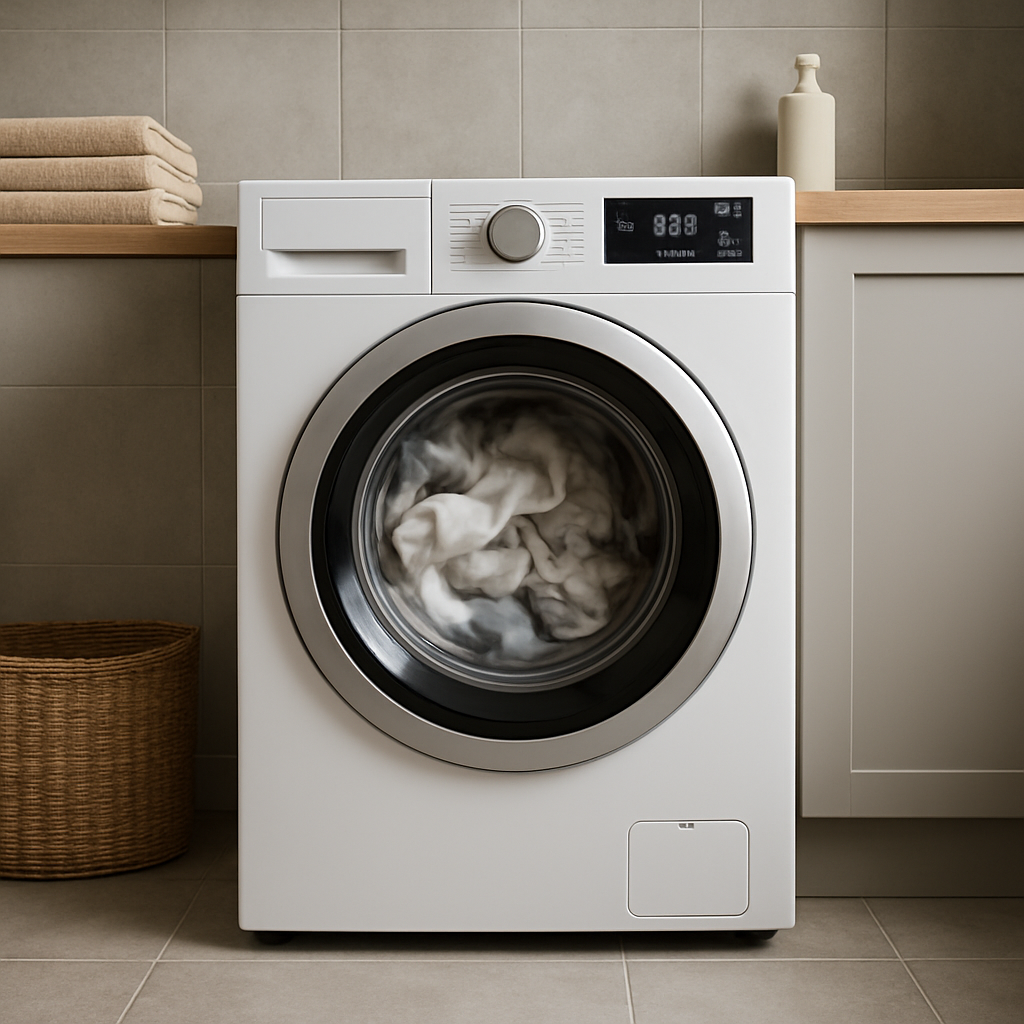
Washing Machine Shaking Violently? Causes and How to Stop It
Quick Answer
Violent shaking is most often a severe load imbalance causing the tub to hit its stops and the machine to walk. Stop the cycle, pause or cancel the spin, and redistribute or reduce the load before trying again. If it still shakes with an empty drum or small balanced load, do not keep running it. Continued severe imbalance can damage the suspension, tub, and cabinet and can tip the washer.
Identify the Noise First
Match what you hear and when it happens. Violent shaking is usually a spin-stage issue, but the trigger matters.
During spin: Rapid banging or thudding, washer moves across the floor, loud knocking as RPM increases. This points to an out-of-balance load or a suspension issue that can no longer control the tub.
During drain (often right before spin): Humming or rattling, then sudden shaking as spin starts. The drain stage can leave a heavy wet mass on one side, setting up an imbalance at the first acceleration.
During fill or agitation: Mild rocking is normal; violent shaking is not. If the cabinet jerks even at low speed, suspect shipping bolts (new install), a broken suspension component, or a hard contact inside the cabinet.
Constant throughout the cycle: Continuous wobble or repeated cabinet contact even without high-speed spin suggests the washer is not sitting solidly or the suspension is compromised.
Intermittent: Spins fine on some loads but not others. This is typical of load-related imbalance (single heavy item, mixed absorbent items, underloading, or overloading).
What This Noise Usually Means
A washer is designed to let the inner tub move slightly on its suspension while keeping the cabinet stable. A severe imbalance happens when the wet load is concentrated on one side, creating a heavy off-center force as the drum speeds up. The suspension tries to control that motion; if the load is too uneven or the suspension is weak, the tub can swing far enough to strike the cabinet or limit stops. That is the banging you hear, and it is also why the washer can walk or look like it is trying to tip.
Most Common Causes
Single heavy item in spin: One blanket, bath mat, robe, pillow, or pair of jeans can ball up and act like a weight on one side.
Overloading: Overfilled drums prevent the load from redistributing; the tub accelerates with a lopsided mass.
Underloading small items: A few light pieces can cling to one side and never spread out during ramp-up.
Mixed absorbency loads: Towels with thin synthetics can leave the towels much heavier and concentrated, increasing imbalance.
Washer not stable on the floor: One foot not firmly planted or a soft/uneven floor amplifies motion and makes an imbalance more violent.
New installation with shipping bolts or packing still installed (front-load and some top-load): Prevents the tub from moving correctly, causing extreme shaking even on normal loads.
Worn or broken suspension parts: Front-load shocks, top-load suspension rods, or snubber/friction components lose control; imbalance becomes frequent and severe.
Loose counterweight (front-load): Concrete weight bolts can loosen, allowing the tub assembly to slam harder during an imbalance.
How to Check Safely
Violent shaking is primarily a safety and damage risk. Your goal is to stop the uncontrolled motion first, then determine whether it is load-related or a machine fault.
Stop the spin immediately: Press pause/cancel. If the washer will not stop, unplug it. Do not try to hold the cabinet in place.
Wait for the drum to fully stop: Do not open the door/lid until movement stops (front-loads may take time to unlock).
Redistribute the load: Break up tangled items and spread them evenly. If it is one heavy item, add a few similar-weight items to balance or wash it alone on a low-spin/bulky setting.
Reduce the load size: If the drum is packed, remove items so they can tumble freely. A tightly packed load often triggers repeated imbalance attempts.
Run a test spin with a small balanced load: Use 4 to 6 similar items (for example, several towels of similar size). If it spins smoothly, the original issue was likely the load.
Check stability at the cabinet: With the washer empty and off, press down on each corner. If it rocks, adjust leveling feet so all corners contact the floor firmly. Tighten the lock nuts if present.
Confirm the floor is solid: A washer on a flexible wood floor can exaggerate imbalance. If the machine is level but still walks, try repositioning to a stronger area or using a rigid washer mat designed for vibration control (not soft foam that allows bounce).
If it is a new install, verify shipping hardware removal: Front-loaders commonly have 3 to 5 shipping bolts at the rear. If any remain installed, do not run the washer until they are removed per the manual.
Listen for cabinet contact with an empty drum: If the washer bangs even with no laundry during a spin/drain-spin test, stop. That points away from load imbalance and toward suspension/counterweight issues.
When This Is Normal vs A Problem
Normal: Brief vibration as the washer ramps up to spin, a short redistribution attempt, or mild movement that does not make the cabinet bang or walk. Occasional imbalance on notoriously difficult items (large blankets) can happen if corrected by reloading.
A problem: Repeated violent shaking, loud banging, the washer walking, visible tub striking the cabinet, or the machine failing to reach full spin because it keeps aborting. It is also a problem if shaking occurs with balanced loads or with an empty drum. Those patterns suggest the suspension is no longer controlling tub motion or installation hardware is wrong, and continuing to run it risks escalating damage.
When to Call a Technician
Shakes violently with an empty drum or small balanced load: Likely suspension, counterweight, or structural issue.
Shipping bolts removed but still extreme shaking on every load: Possible shock/rod failure, loose counterweight, or tub support problem.
Visible tub-to-cabinet contact or loud metal-on-metal impacts: Stop using the washer until inspected.
Washer tips, jumps, or cannot stay in place: Do not keep testing; this is beyond normal imbalance behavior.
Water leak appears after a violent event: A hard strike can damage hoses, pump connections, or tub components and needs prompt inspection.
How to Prevent This Problem
Load for balance, not just capacity: Mix items so weight is distributed. Avoid washing one heavy item by itself unless using a bulky/low-spin option.
Use the right cycle and spin speed: Bulky, bedding, or delicate loads often need lower spin to prevent severe imbalance events.
Do not pack the drum: Items must tumble freely to self-balance before high-speed spin.
Keep the washer stable: Recheck leveling if the washer is moved or if it begins to rock over time.
Pause and redistribute at the first bang: One violent event can lead to repeated impacts; correct it early.
Related Washing Machine Noise Problems
Banging only when spinning a single blanket or bath mat: Load-induced imbalance that often needs a bulky cycle or added balancing items.
Washer walks forward during spin without loud banging: Floor/leveling issue amplifying normal vibration into movement.
Thumping that speeds up with RPM but no walking: Mild to moderate imbalance, often fixed by redistributing the load.
Grinding or roaring during spin: Not an imbalance pattern; can indicate bearing or drive issues that require different diagnosis.
Rattling at drain then shaking as spin starts: Drain stage leaves a heavy wet clump; also check for a partial drain problem that keeps water in the load.
Conclusion
Violent shaking is a severe imbalance event until proven otherwise. Stop the spin, redistribute or reduce the load, and verify the washer is stable and correctly installed. If it still shakes with a balanced test load or an empty drum, stop using it and schedule service to prevent suspension and tub damage.
Frequently Asked Questions
Why does my washer shake violently only on certain loads?
Certain items create a heavy off-center mass when wet, especially blankets, bath mats, hoodies, and jeans. Mixed loads can also separate by weight, leaving the heaviest items on one side at spin start. If the washer spins normally with a balanced towel load, the machine is likely fine and the fix is load redistribution, smaller loads, or a lower-spin/bulky setting for problem items.
Is it safe to keep running a washer that bangs during spin?
If it is a brief thump that stops after the washer redistributes and the cabinet does not move, it is usually manageable. If it is violent, repeated banging, or the washer walks, stop the cycle. Continued severe imbalance can damage shocks/suspension, loosen counterweights, and cause the tub to strike wiring, hoses, or the cabinet.
My washer is level but still shakes. What should I check next?
Confirm all feet are firmly loaded on the floor and the lock nuts are tight. Check the floor for flex; a bouncy surface can make a normal imbalance feel extreme. Then run an empty or small balanced test load. If violent shaking continues, suspect shipping bolts (new machine) or worn suspension parts.
Can shipping bolts really cause violent shaking?
Yes. On many front-loaders, shipping bolts lock the tub for transport. If any are left installed, the tub cannot move correctly, so the cabinet takes the force and the washer can shake violently even with a normal load. Do not operate the washer until they are removed according to the manual.
What is the quickest test to tell load imbalance from a machine problem?
Run a spin with a small, evenly distributed load of similar items. If it ramps up smoothly, the violent shaking on previous loads was load-related. If it still bangs, walks, or aborts spin, stop and arrange service because the suspension/counterweight system may not be controlling tub movement.
After all the noise, the real change feels almost boring—in the best way. You notice fewer stings, fewer second-guesses, and somehow the day moves on faster.
What’s left is quieter: a sense that the world can be handled without dramatics. Not everything gets fixed at once, but the edge is gone, and that’s enough to breathe.