Dishwasher Making Loud Banging Sound: Causes & Fixes
Quick Answer
A loud banging sound is most often the spray arm or rack physically striking something: a tall dish, loose utensil, dropped item, or a shifted rack. It happens when water force or vibration makes a moving part swing into an obstruction, or when a worn mount lets it wobble. First action: stop the cycle, open the door, spin both spray arms by hand, and check for contact marks or anything protruding into their path.
Identify the Noise First
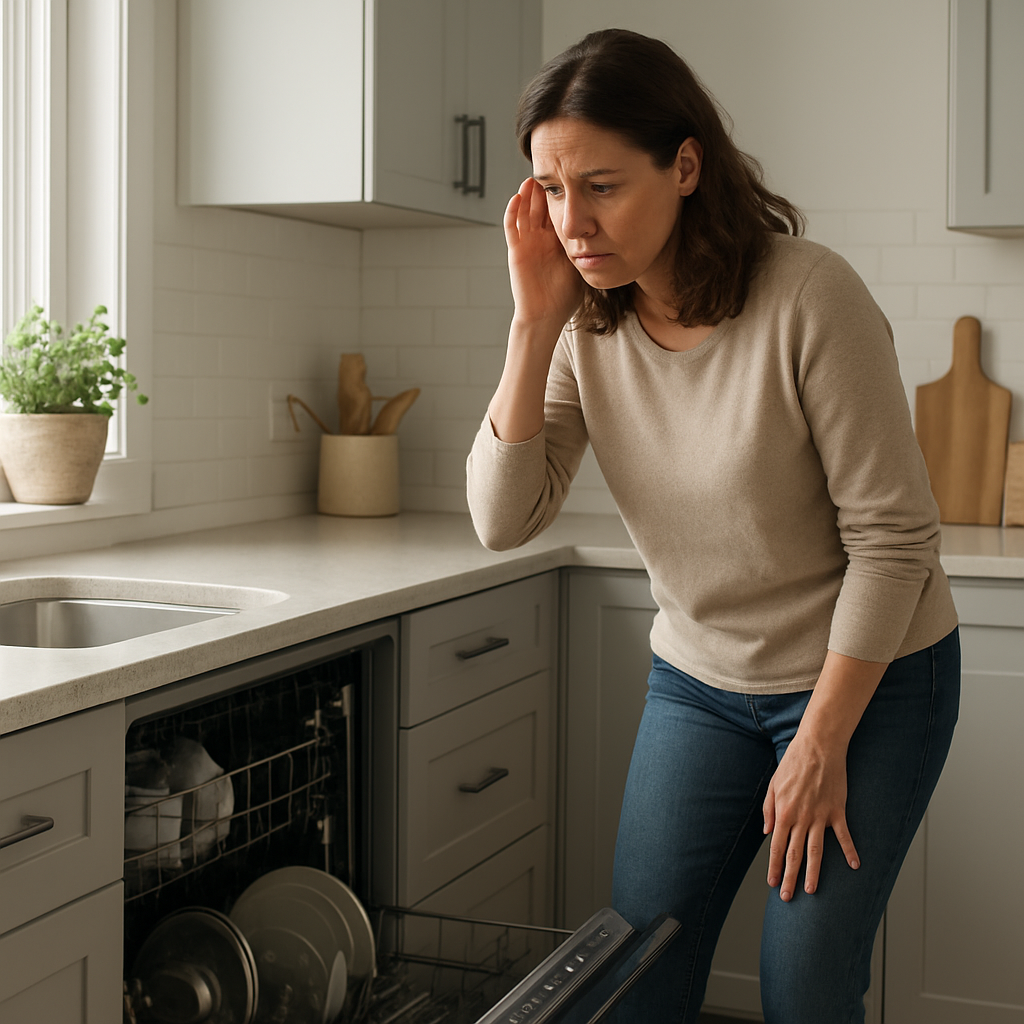
The same “bang” can come from different moments, so pin down the exact phase. Start a cycle and listen with your ear near the door, then briefly pause by opening the door when the noise happens to see what just stopped.
- During water fill: If the bang happens before you hear spraying and then goes quiet, it’s less likely to be internal impact. Re-check by waiting until you clearly hear the spray.
- During spray / circulation: If the bang repeats every few seconds or speeds up/slows down in a rhythmic pattern, suspect a spray arm striking dishes, the rack, or the tub.
- During draining: A bang right as draining starts can be a loose item being shoved by the water surge inside the tub, not a pump problem. Confirm by checking for a free object in the sump area and under racks.
- During heating: True heater-related noises are usually ticks or pops, not bangs. If it bangs with steady spray noise, stay focused on impact from moving parts.
- At start of cycle: A bang in the first minute often points to a load shifting as the first strong spray hits, or a rack not seated after loading.
- At end of cycle: End-of-cycle bangs are commonly a final rinse surge shifting a light load or a utensil falling into the spray path.
- Constant: Constant banging during spray usually means continuous contact: spray arm hitting a tall item each rotation.
- Intermittent: Intermittent bangs often mean a light item moves around and only occasionally reaches the spray arm or rack wheels.
What This Noise Usually Means
A dishwasher “bang” from this symptom set is almost always physical impact inside the tub. The circulation water jet spins the spray arms and can also nudge lightweight items. If anything protrudes into the sweep area, the arm strikes it once per rotation, producing a repetitive thump or bang. If an arm mount, rack guide, or hub is worn, the arm can wobble and hit the rack or tub even with a correctly loaded machine.
Most Common Causes
- Tall dish or utensil blocking a spray arm: Cutting boards, sheet pans, spatulas, or wine glasses can extend into the arm path and get struck each rotation.
- Upper rack not fully seated or installed crooked: When the rack is off its rails or the end caps are missing, the rack can shift and enter the spray arm’s sweep.
- Loose lightweight items: Small lids, baby bottle parts, measuring spoons, and plastic containers can flip and fall into the arm path mid-cycle.
- Utensil dropped through the rack: A knife, spoon, or straw can slip down and contact the lower spray arm or block its rotation, causing banging and uneven spray.
- Spray arm loose, warped, or cracked at the hub: A loose retaining nut, worn bearing surface, or cracked hub lets the arm climb and hit the rack or tub under load.
- Rack wheel/track wear causing rack sway: Missing wheels or worn rails let a rack drift into moving parts when water force is high.
How to Check Safely
1) Confirm the cycle stage
- Start the dishwasher and wait until you clearly hear spraying.
- When the bang occurs, open the door. If the sound stops immediately, the source is inside the tub and tied to motion (arms/racks/load).
2) Isolate the load factor
- Stop the cycle and remove the bottom rack, then check the sump area for any fallen items.
- Reinstall racks and spin both spray arms by hand. Any contact, resistance, or clicking is a direct clue.
- Run a short test with the dishwasher half-loaded using only low-profile items. If the bang disappears, it’s load interference, not a component failure.
3) Inspect the relevant components
- Check both spray arms for looseness at the mount. They should spin freely without wobble.
- Inspect the arm edges for fresh scuffing, nicks, or shiny rub marks.
- Inspect rack position: confirm the rack is fully on the rails and the rack stops/end caps are present and secure.
4) Confirm or rule out an obstruction
- Look for a protruding utensil handle, a flipped plastic lid, or a dish corner in the spray path.
- Check for items hanging through the rack grid where they can be hit from below.
- If the arm has a hard stop point when hand-spun, find what it’s touching before restarting.
5) Perform a controlled test
- Re-load with clearance: keep tall items on the sides, place utensils fully down in the basket, and avoid stacking lightweight plastics above the arm.
- Run the machine and listen for rhythm: one bang per arm rotation points to direct strike; random bangs point to loose items moving during spray.
- If banging continues with correct loading and clear arm sweep, stop using the dishwasher until the spray arm mount or rack hardware is corrected.
When This Is Normal vs A Problem
Normal: A brief single thump when strong spray starts and a light plastic shifts once, then the noise stops for the rest of the cycle. A soft, steady spray sound with no repeating impact.
A problem: Repeating banging at a consistent interval (often once per rotation), any bang that continues for minutes, or any banging that coincides with poor wash performance (upper rack not cleaning, soap not dissolving). Also problematic: visible rub marks on the tub, a spray arm that wobbles, or a rack that won’t stay aligned on its tracks.
When to Call a Technician
- The dishwasher bangs even when empty or lightly loaded with verified spray-arm clearance.
- A spray arm mount is stripped, the hub is cracked, or the arm will not stay tight.
- Racks are unstable due to broken rails, missing stops, or damaged supports you can’t secure.
- You see tub damage (deep gouges) or the arm is striking the tub hard enough to risk leaks over time.
How to Prevent This Problem
- Before starting, hand-spin both spray arms to confirm free rotation and clearance.
- Keep tall items to the outer edges and avoid placing long utensils where they can protrude above the rack line.
- Secure lightweight plastics so they can’t flip: place them on angled tines, use top rack where applicable, and avoid nesting.
- Don’t overload racks to the point where dishes can shift when spray begins.
- Replace missing rack end caps, broken wheels, or loose rack guides promptly to prevent rack drift.
Related Dishwasher Noise Problems
- Rapid clicking during wash caused by a spray arm clipping a utensil handle each rotation
- Grinding during wash from a broken spray arm hub wobbling and scraping the rack
- Rattling only on the top rack from loose lightweight plastics bouncing under spray force
- Thumping when the upper rack is pushed in from a mis-seated rack hitting the spray arm
- Clunking after loading from a fallen utensil contacting the lower spray arm
Conclusion
A loud banging sound is usually a spray arm or moving rack assembly striking a dish, utensil, or a shifted component. Identify whether it happens during active spraying, then verify spray-arm clearance by hand-spinning and correcting the load. If banging continues with clear arms and stable racks, suspect a loose/warped spray arm or worn rack hardware and address it before continued use causes damage.
Frequently Asked Questions
Why does the banging sound repeat in a steady rhythm?
Can a dishwasher bang even if nothing looks out of place?
Yes. A cracked or loose spray-arm hub can look normal at rest but wobble under water pressure and load. Also check for a small item that only moves once the spray starts, such as a lid or spoon that flips and drops into the sweep area mid-cycle. The controlled half-load test is the fastest way to prove load interference versus a loose component.
What should the spray arm feel like when I spin it by hand?
It should rotate smoothly with minimal side-to-side play and no hard stopping points. A slight water drag is normal if the tub is wet, but any clicking, scraping, or a spot where it stops at the same position indicates contact or a warped arm.
Is it safe to keep running the dishwasher if it’s banging?
If it’s a one-time thump that stops after you correct a shifted item, it’s typically fine. If it keeps banging, stop and fix the interference. Repeated impact can crack a spray arm, damage rack hardware, and score the tub surface, creating a larger repair later.
What stays with me is how ordinary the whole thing feels once it’s in place. The urgency drains away, replaced by that small, steady sense that things can just work.
There’s a little relief in the quiet momentum after the noise. Not fireworks—more like a door that finally closes without a fight.