Dishwasher Rattling With Dishes: Causes & Fixes
Quick Answer
The most common cause is dish-to-dish or dish-to-rack contact from unstable loading, letting vibration from the spray action turn into a rattle. It happens when items can shift, touch the spray arm, or buzz against rack tines. First diagnostic action: run a short rinse with the dishwasher empty, then run it again with a minimal, well-spaced load to confirm the noise is load-related.
Identify the Noise First
Don’t guess the source until you match the rattle to a cycle stage. A load-contact rattle almost always shows up during spray/circulation when water pressure is pushing the spray arms and vibrating the racks.
- During water fill: If the rattle happens only while the tub is filling and stops once spraying begins, it’s less likely dish contact. Confirm by listening again 2–5 minutes in, after fill completes.
- During spray / circulation: If the rattle starts once you hear strong spraying and changes when you open the door (spray stops immediately), it strongly points to dishes, utensils, or racks vibrating or hitting a spray arm.
- During draining: A rattle only at drain points away from the load. To verify, wait for the “whoosh” drain sound; if the rattle overlays that only, the timing doesn’t match load vibration.
- During heating: A rattle during a quiet heat hold is rarely load contact unless an item is slowly shifting and tapping as the tub expands. Confirm whether it also happens in active spray.
- At start of cycle: Early rattles usually begin right when initial spray starts, not at the moment you press start. Note whether it begins after the first fill.
- At end of cycle: A rattle at the very end may be the last short spray or cool-down circulation. If it occurs only with dishes and not when empty, treat it as load/rack related.
- Constant: Continuous rattling through all phases is less consistent with load contact. Confirm by pausing mid-cycle; if it stops instantly when you open the door, it’s tied to spray-induced vibration, not a constant mechanical noise.
- Intermittent: Intermittent rattling that comes and goes during spray usually means an item moves only when hit by a specific spray-arm stream or when the arm passes a certain position.
Isolation method: start a cycle, wait for spraying, then crack the door open just enough to stop the wash action. If the rattle stops immediately, suspect dish/rack contact. If it continues as the machine coasts down, suspect something other than the load.
What This Noise Usually Means
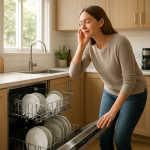
A rattling-with-dishes complaint is typically vibration being amplified by the load. The spray action shakes the rack assembly and anything loosely supported. When two hard surfaces can touch—glass to glass, pot to tine, utensil to door, lid to rack—they “chatter” as the rack vibrates. Another common version is a tall item or utensil handle contacting a rotating spray arm; each pass creates a repeating rattle or rapid tapping that speeds up or slows down with spray intensity.
Most Common Causes
- Items touching each other (glass-to-glass, plate-to-plate, metal-to-metal): The rack vibrates during spray and the contact points chatter, especially with lightweight items.
- Utensils nested or loose in the basket: Spoons stacked together, long utensils bridging compartments, or small metal items can rattle continuously under spray impact.
- Cookware or handles protruding into spray arm path: A pan handle, spatula, or tall bottle can tap the spray arm each rotation, producing a rhythmic rattle/tick during circulation.
- Light plastic items lifting and hitting the rack or other dishes: Bowls, lids, and containers can float or flip and then rattle as they repeatedly re-seat.
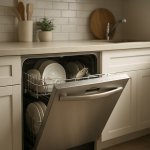
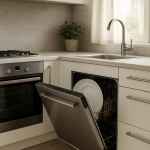
- Rack not fully seated on the rails: If the rack is slightly off-track or not pushed fully in, it can chatter against the rail stops when water pressure pulses.
- Worn or missing rack tine tip coatings / loose tine row: Exposed metal-on-metal contact and looser support increases vibration noise with normal spray action.
How to Check Safely
1) Confirm cycle stage
Run the dishwasher and wait until you clearly hear active spraying. Note whether the rattle begins only during spray. Open the door to stop the wash action; load-contact rattles stop immediately when spraying stops.
2) Isolate the load factor
Run a short cycle empty. If the rattle is gone, the issue is almost certainly dish placement, utensil loading, or rack stability. If you can’t run empty, remove only the upper rack load and retest to see which rack is involved.
3) Inspect relevant components (load and rack only)
With power off and the unit cool, pull out each rack and check that it rolls smoothly, sits squarely on both rails, and fully stops in the correct position when pushed in. Wiggle the rack gently; excessive side-to-side play can make normal vibration sound like a rattle.
4) Confirm or rule out obstruction in the spray arm path
Before starting a cycle, spin the spray arms by hand and check clearance. Look for anything tall or long that could intersect the arm’s sweep: utensil handles, skewers, bottle tops, pan handles, and oversized cutting boards. Ensure nothing can fall through the rack and hang below.
5) Perform a controlled test
Load only stable items: plates in separate slots, bowls angled, no plastics, and utensils handle-down without nesting. Start the cycle and listen. If quiet, add back items in small groups until the rattle returns; the last group added contains the contact point causing the noise.
When This Is Normal vs A Problem
Normal: Occasional light clinks during strong spray when a utensil shifts slightly, or brief tapping when a plastic lid resettles. These sounds are short, irregular, and don’t repeat on a steady rhythm.
A problem: A repeating rhythmic rattle/tick that matches spray arm rotation, a loud constant chatter throughout wash, or a rattle that starts only when a particular rack is loaded. Any sound that stops instantly when spraying stops and returns the moment spray resumes is almost always a load-contact issue that should be corrected to prevent broken dishes and spray arm damage.
When to Call a Technician
Call a technician if the rattle persists with the dishwasher empty and both racks removed, or if you cannot eliminate a rhythmic tapping after confirming full spray-arm clearance and stable loading. Also call if a rack will not seat correctly on the rails, repeatedly jumps the track, or has structural looseness you can’t secure—rack and rail issues can worsen and cause repeated contact no matter how you load.
How to Prevent This Problem
- Keep hard items from touching: leave a small gap between glasses, mugs, and plates.
- Load utensils to prevent nesting; mix types and avoid stacking spoons tightly together.
- Face concave items so spray doesn’t “cup” and lift them; secure lightweight plastics and lids.
- Keep tall items and handles inside the rack footprint; confirm spray arms spin freely before starting.
- Push racks fully in and verify both sides are on the rails before closing the door.
- Replace missing tine caps and correct loose rack sections so items don’t buzz against exposed metal.
Related Dishwasher Noise Problems
- Rhythmic ticking during wash that disappears when one tall item is removed (spray arm strike).
- Upper rack rattles only when the cutlery tray is loaded (utensil interference and nesting).
- Plastic container “machine-gun” tapping during wash (floating and re-seating).
- Rattle only when the rack is half pulled out, quiet when fully seated (rack not seated on rails).
- Clunking when washing large pots and sheet pans (handle and cookware contact shifting under spray).
- Light buzzing from metal lids or measuring spoons in the basket (small-item vibration).
Conclusion
A dishwasher that rattles only when dishes are inside is usually vibrating items contacting each other, the rack, or the spray arm. Prove it by testing empty, then reloading in a controlled way until the noise returns. Once you identify the item group and the exact contact point, adjust spacing, secure lightweight pieces, and confirm spray arm clearance before running a full cycle.
Frequently Asked Questions
Why does the rattling stop when I open the door?
Opening the door stops the spray action immediately, which removes the vibration source that makes loose items chatter. That pattern strongly supports dish-to-dish, dish-to-rack, or spray-arm contact rather than a rack rolling noise or a constant mechanical rattle.
How can I tell if it’s the upper rack or lower rack causing the rattle?
Run one test with the upper rack empty and the lower rack normally loaded, then swap: load the upper rack and keep the lower rack minimal. If the rattle follows one rack’s load, focus on spacing and item height on that rack and recheck spray-arm clearance at that level.
What loading mistake causes a steady, repeating rattle during the wash?
A steady repeating rattle usually means a spray arm is tapping something each rotation: a utensil handle, a tall cup, a pan handle, or a small item that fell through the rack. The repetition is the clue; random chatter is more typical of items touching each other.
Why is the noise worse with light plastic items?
Light plastics can flex, lift, or shift under spray force. When they move, they can slap the rack, tap a neighboring dish, or flip and repeatedly re-seat. Securing them so they can’t lift typically eliminates the rattle.
If dishes are not touching, why would they still rattle?
If a dish isn’t firmly supported by the tines—sitting on a tine tip, balanced on an edge, or wedged loosely—it can vibrate against the rack even with no neighboring contact. Re-seat the item so it has two stable support points and doesn’t rock when you tap the rack by hand.
There’s a moment right after the last line where the whole thing feels less heavy. The noise fades, and what’s left is a steadier kind of clarity—almost boring in the best way.
Not every problem gets smaller, but this one stops taking up so much space in the day. You move on with a little more ease, like exhaling after holding your breath too long.