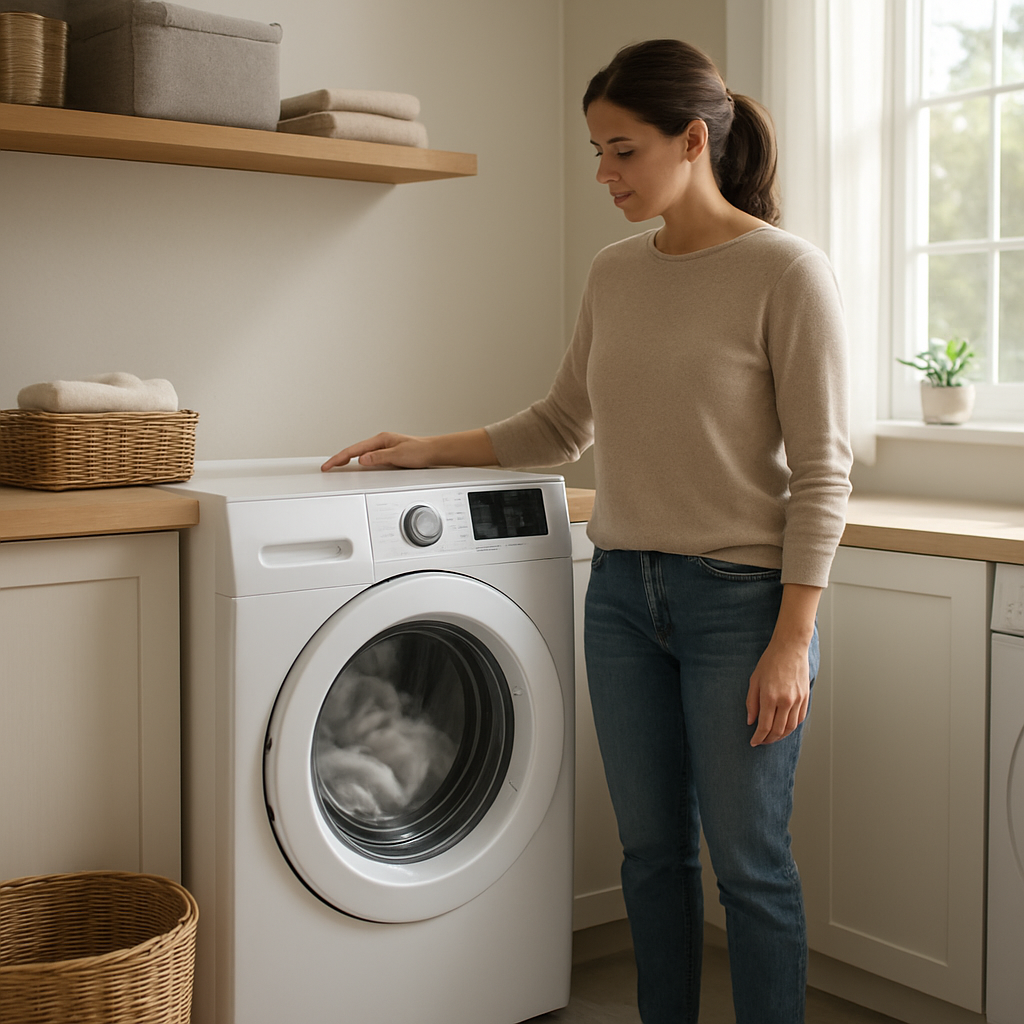
An intermittently loud dryer is most often a worn support part that only acts up under certain conditions: a flat-spotted drum roller, a belt tensioner pulley bearing starting to seize, or a blower wheel that occasionally contacts housing. First action: run the dryer empty on Air Fluff and listen, then repeat on High Heat. If the noise changes with heat or after a few minutes, suspect a failing bearing or roller and plan an internal inspection.
Identify the Noise First
Intermittent noise diagnostics start with two questions: when does it happen, and what does it sound like. Use this quick guide to match your situation.
During drum rotation: A thump-thump, rumble, or squeal that comes and goes as the drum turns usually points to a roller, idler pulley, belt, or drum seal that only misbehaves at certain drum positions or loads.
At startup: A loud squeal or scrape for the first 5 to 20 seconds that fades often indicates a dry bearing surface or flat spot that quiets once it warms up and starts moving freely.
During heating: Noise that appears only after the dryer heats for several minutes often means thermal expansion is changing clearances, letting a blower wheel rub, a warped panel touch, or a marginal bearing tighten up.
During cooling cycle: If it gets loud as the heater turns off and the fan continues, focus on the blower wheel area and motor bearings. Load changes and airflow changes can trigger intermittent contact.
Constant: Constant grinding or roaring is less consistent with intermittent component failure and more consistent with a fully failed bearing, continuously rubbing blower wheel, or foreign object lodged in a seal.
Intermittent: Noise that comes in bursts, changes with load size, or shows up every few rotations is classic for a component that is failing but not fully seized or broken yet.
Helpful test: if the sound stops when you open the door (most dryers stop the motor), it is tied to moving parts. If it continues briefly, listen for a fan run-down noise that points toward the blower wheel or motor.
What This Noise Usually Means
Intermittent loudness usually means a part is right on the edge of failure and only becomes noisy when its conditions line up: heat, speed, load, or alignment. Bearings can get noisy when warm (grease thinning, metal expansion), rollers can thump only when their flat spot hits the floor of the drum path, and blower wheels can rub only when vibration or lint buildup shifts them slightly. Because the symptom is not steady, your goal is to find what triggers it and replicate it for a controlled check.
Most Common Causes
Flat-spotted or worn drum roller(s): Produces intermittent thumping/rumbling that may fade as the roller warms, then return after cooling.
Idler pulley (belt tensioner) bearing starting to seize: Intermittent squeal or chirp, often more noticeable at startup or as the unit heats.
Blower wheel rubbing or loose on the motor shaft: Intermittent scraping, ticking, or roaring that may change between heating and cooling due to airflow and vibration changes.
Worn drum glides or front bearing (common on some designs): Intermittent scraping that can change with load size and drum position.
Belt wear or belt seam issue: A rhythmic slap or chirp that comes and goes, sometimes only with heavier loads.
Foreign object intermittently contacting drum or seal: A coin, zipper pull, or underwire can intermittently tick or scrape as it shifts.
Motor bearings beginning to fail: Intermittent high-pitched squeal or growl that becomes more frequent over time, sometimes louder when hot.
How to Check Safely
These checks are aimed at confirming an intermittent component failure without guessing. Stop if you smell burning, see smoke, or the breaker trips.
1) Reproduce the noise in a controlled way
Run empty on Air Fluff for 3 to 5 minutes. Note if the noise appears.
Run on High Heat for 10 minutes. Note if the noise begins only after warming up.
Run a medium load. Intermittent roller and glide issues often get louder under load.
2) Pinpoint where the sound comes from
Front lower area is commonly idler pulley, front glides, or blower housing (depending on design).
Rear area is commonly rear drum rollers or rear bearing (model dependent).
Top panel area can be drum contact with cabinet due to worn supports or a shifting drum.
If you can safely do so, lightly press on the top of the dryer during operation. A noise that changes with cabinet pressure often indicates drum alignment/support wear rather than a blower-only issue.
3) Do a safe exterior inspection before opening anything
Unplug the dryer.
Check the lint filter area for rattling parts and remove any debris.
Inspect the exhaust duct connection for vibration or a loose clamp that can mimic a failing component.
Rotate the drum by hand (door open) and feel for a heavy spot, roughness, or a repeating bump.
4) If you’re comfortable, perform a basic internal check
This varies by model. If you are not comfortable removing panels, skip to calling a technician. Always unplug first.
Remove the appropriate access panel for your dryer style.
Drum rollers: Spin each roller by hand. A good roller spins smoothly and quietly. A failing roller may feel gritty, wobble, or stop abruptly.
Idler pulley: Spin the pulley. Any squeal, roughness, or side-to-side wobble is a strong match for intermittent squealing during operation.
Blower wheel: Check for lint clumps, cracks, or rubbing marks on the housing. Try to wiggle the wheel; it should be secure on the shaft.
Glides/slide pads: Look for missing pad material, exposed metal, or uneven wear that could cause intermittent scraping.
5) Confirm heat-related change
If the dryer is quiet cold but loud after 10 to 15 minutes, suspect a bearing surface tightening up or a blower wheel shifting/rubbing as parts expand.
If it is loud at startup and calms down, suspect a dry idler pulley/roller bearing or a flat spot that becomes less pronounced once moving.
When This Is Normal vs A Problem
Usually normal:
A brief change in sound as the burner or heater cycles on and off, without scraping, thumping, or squealing.
Soft ticking from buttons, zippers, or a lighter load shifting, as long as it is clearly inside the drum and not worsening.
Usually a problem:
Intermittent thumping that repeats with drum rotation, especially empty.
Squealing/chirping that starts occasionally and gradually becomes more frequent.
Scraping that appears after the dryer warms up or only under load.
A sudden roaring whoosh or growl that changes with airflow, pointing to blower wheel issues.
Intermittent noises are often an early-stage failure. Waiting typically turns an occasional noise into cabinet damage, belt failure, or a seized roller/pulley.
When to Call a Technician
You can’t access the internal components safely or your model requires significant disassembly to reach rollers/blower.
The noise is accompanied by a burning smell, overheating, or the drum stops intermittently.
You confirmed rough or wobbling rollers/pulley but don’t have the tools to replace them.
The blower wheel is loose or rubbing and you can’t confirm the cause (broken wheel, stripped hub, motor shaft issue).
Gas dryer: if any disassembly is near the burner compartment and you are not experienced, schedule service.
How to Prevent This Problem
Do not overload. Overloading accelerates roller, glide, and belt wear and makes borderline parts go noisy sooner.
Keep airflow strong. Clean lint filter every load and maintain the vent. Overheating can push marginal bearings and plastic blower wheels into intermittent rubbing.
Empty pockets and manage metal items. Coins and fasteners often create periodic ticking that turns into seal damage when they migrate.
Address the first intermittent squeal. Replacing an idler pulley or rollers early is usually simpler than repairing secondary damage from a seized part.
Related Dryer Noise Problems
Dryer thumps once per revolution (classic flat roller or belt seam).
Dryer squeals only at startup (idler pulley or roller bearing drying out).
Dryer makes a roaring fan noise (blower wheel loose, cracked, or rubbing).
Dryer scraping sound that changes with load size (glides/front bearing wear or drum seal contact).
Dryer rattles intermittently (foreign object in drum seal, lint chute, or blower housing).
Conclusion
An intermittently loud dryer is usually a support or airflow component failing under specific conditions, not a random mystery sound. Identify whether the noise tracks drum rotation, startup, or heating, then confirm by hand-checking rollers, idler pulley, and the blower wheel with the dryer unplugged. If you feel rough bearings, wobble, or see rubbing marks, plan the repair before the noise becomes constant and damage spreads.
Frequently Asked Questions
Why is my dryer loud only sometimes and then it goes back to normal?
That pattern fits a part that intermittently changes friction or clearance: a roller with a flat spot, an idler pulley bearing starting to bind, or a blower wheel that occasionally rubs when the cabinet vibrates. The dryer can sound normal until heat buildup, load shift, or a certain drum position triggers the noise.
My dryer is quiet empty but loud with clothes. What does that point to?
Load-sensitive noise usually points to drum support wear: rollers, glides, or a front bearing surface. Clothes add weight and change drum alignment, which makes a borderline worn part contact harder and get loud. Run a medium load and listen for a thump pattern that matches drum rotation.
What does it mean if it squeals for a few seconds at startup and then stops?
Most often it is the idler pulley or a drum roller bearing beginning to fail. At startup, the bearing has higher friction and can squeal, then quiet once it warms slightly and begins turning more freely. It is a warning sign, not a harmless quirk, if it repeats and becomes more frequent.
Can heat make a dryer noise appear only after 10 minutes?
Yes. Heat changes clearances and can expose a marginal condition. Common examples are a blower wheel that starts rubbing as the housing warms, or a bearing that gets louder as grease thins and the part spins faster under a warmer, steadier cycle.
If I keep using it, what is most likely to fail next?
Intermittent roller or idler pulley noise often progresses to a seized pulley/roller, which can damage the belt or cause the drum to stop turning. Intermittent blower wheel rubbing can progress to a cracked wheel or stripped hub. If the intermittent noise is getting more frequent, schedule repair soon.
There’s a strange relief in seeing the whole thing sit still for once—no swirling panic, no frantic rereading, just the world behaving the way it’s supposed to. The noise fades, and you can feel your attention coming back to you.
After that, the rest is ordinary: days continue, conversations move on, and the solution doesn’t demand a dramatic entrance. It just quietly does its job, like a well-placed grocery list you somehow didn’t have to write.