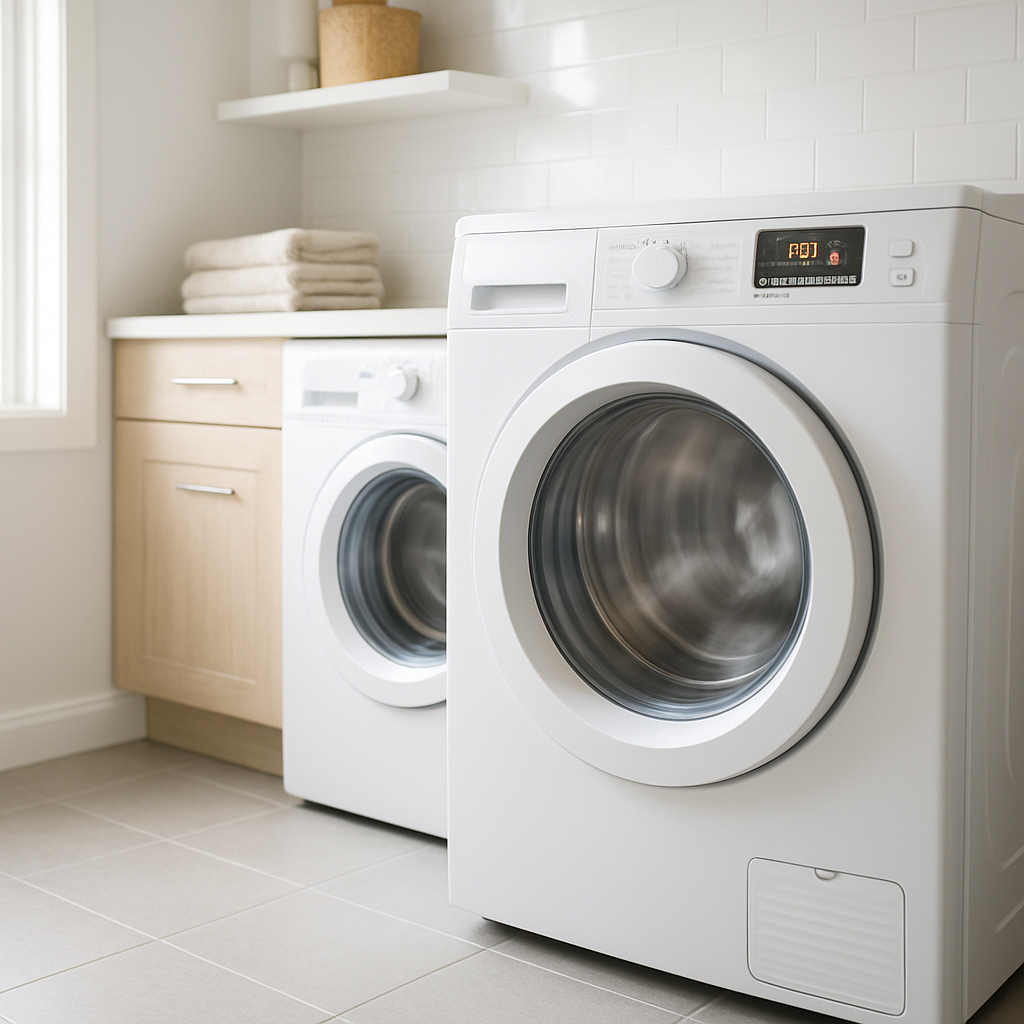
Often, yes. A dryer can sound louder when empty because there is no laundry load to keep the drum centered and dampen vibration. The drum and cabinet can resonate, especially on high speed. First action: run a small, mixed load (4–6 items) and listen. If the noise drops significantly, you are dealing with a no-load imbalance/resonance issue, not an immediate part failure.
Identify the Noise First
Use this quick guide to match the noise to a no-load imbalance pattern.
During drum rotation: A hollow booming, thumping, or cabinet rattle that gets quieter with a small load points to no-load resonance or minor drum support play that only becomes obvious when empty.
At startup: A brief bump or thud right as the drum begins turning is commonly the drum settling onto glides/rollers with no laundry to steady it. A repeated bang is not typical.
During heating: A louder, tinny vibration after heat starts can be normal expansion noise amplified by an empty drum. If it becomes a steady squeal or grinding, that is different from imbalance.
During cooling cycle: If the noise fades as the dryer cools but only when empty, cabinet/drum resonance is likely. If the noise remains sharp and mechanical regardless of temperature, look beyond imbalance.
Constant: A constant scraping, squeal, grinding, or roaring is not a no-load issue. Those sounds usually track to worn supports, a blower problem, or a foreign object.
Intermittent: Random rattles that come and go, especially with certain drum positions, can be empty-drum vibration or something loose. If adding laundry stops it, imbalance/resonance is the best fit.
What This Noise Usually Means
With no laundry inside, the drum is free to ride on its supports with very little damping. Small clearances in the drum glides, rear bearing, or rollers can let the drum shift slightly as it rotates. That slight shift is usually harmless, but the empty metal drum acts like a speaker. Vibrations that would be absorbed by clothes instead bounce through the cabinet panels, sounding louder than they really are.
In other words, empty-drum noise is often an amplification problem, not a power or motor problem. The key diagnostic is whether the sound changes noticeably when you add a normal load.
Most Common Causes
Normal no-load resonance: Cabinet and drum panels amplify vibration when there is no laundry to dampen it.
Dryer not level or sitting on an uneven floor: An empty drum makes the cabinet more sensitive to rocking and panel buzz.
Loose feet or weak floor contact: One foot barely touching will rattle more when the drum is empty and spinning freely.
Minor drum support wear showing up only when empty: Slightly worn glides/rollers/bearing can allow extra drum movement that is masked with a load.
Loose panel, lint screen housing, or console screws: Empty-drum vibration can excite a buzz that disappears under load.
How to Check Safely
These checks are aimed at confirming a no-load imbalance/resonance issue and ruling out obvious problems.
Compare empty vs small-load: Run the dryer empty for 30–60 seconds, then run it with 4–6 mixed items (not one heavy item). If the noise drops a lot with the small load, it supports the no-load imbalance explanation.
Check leveling and rock: With the dryer off, push on the top corners. If it rocks, adjust the leveling feet until all four corners are solid.
Confirm stable floor contact: Make sure the feet are not sitting on a slick mat edge, broken tile, or soft flooring that lets the dryer shift.
Inspect for cabinet buzz points: Lightly press on the front panel, top, and sides while it runs empty. If the sound changes when you press a specific spot, you likely have a panel resonance or loose fastener.
Check lint screen fit: Make sure the lint screen is fully seated and not vibrating in its slot. A loose lint screen can chatter louder when the drum is empty.
Listen for non-imbalance sounds: If you hear squealing, scraping, grinding, or a roaring air sound, stop the test. Those are not typical no-load noises.
When This Is Normal vs A Problem
Usually normal:
The dryer is noticeably louder only when empty, and becomes much quieter with a normal load.
The sound is a low, hollow thump or a cabinet vibration rather than a sharp metal scrape.
The dryer is otherwise drying normally, and the drum turns smoothly.
Likely a problem:
The noise is loud with or without clothes, and does not change much with load size.
You hear squealing, grinding, scraping, or a rhythmic metal-on-metal sound.
The drum feels rough when turned by hand (power off), or you notice burning smell, weak airflow noise changes, or worsening sound over time.
The dryer “walks” or shifts position during use even after leveling.
When to Call a Technician
Call if the noise stays loud under a normal load, especially if it is a squeal, scrape, grind, or roar. Those patterns commonly involve drum supports, blower wheel issues, or foreign objects in the air path.
Call if you cannot stop cabinet rocking with leveling adjustments. An unstable installation can damage the dryer and the vent connection over time.
Call if pressing on panels changes the noise but tightening accessible screws does not help. Hidden fasteners, internal brackets, or worn mounts may be involved.
Call if the drum shows excessive movement front-to-back or up-and-down. That can indicate worn glides, rollers, or a rear bearing that should be addressed before it escalates.
How to Prevent This Problem
Keep loads balanced: Avoid running the dryer with one heavy item by itself. Add a few smaller items to stabilize drum movement.
Maintain level and stability: Re-check leveling after moving the dryer, replacing flooring, or changing washer/dryer positions.
Do not overload: Overloading stresses drum supports and can accelerate wear that later shows up as empty-drum noise.
Close and seat parts fully: Make sure the lint screen is seated and the door closes firmly to reduce vibration and rattles.
Use a firm surface: If installed on flexible flooring, consider a solid, stable base so the cabinet is less prone to resonance and rocking.
Related Dryer Noise Problems
Dryer thumps only with one item inside: True load imbalance from a single heavy towel or bath mat.
Dryer rattles when the drum is empty but stops when you press on the top: Cabinet panel resonance or loose fasteners.
Dryer squeals more as it warms up: Drum support friction issue rather than no-load resonance.
Dryer makes a scraping sound once per revolution: Drum seal/glide wear or an object contacting the drum.
Dryer roars or whooshes loudly regardless of load: Blower wheel or airflow path issue, not an imbalance symptom.
Conclusion
A dryer that sounds louder when empty is often behaving normally because the empty drum amplifies vibration and has no laundry to keep it centered. Verify by running a small mixed load and checking leveling. If the noise remains loud under load or shifts into squealing, scraping, or grinding, stop using it and schedule service to prevent further wear.
Frequently Asked Questions
Why is my dryer quieter when it has clothes in it?
Clothes act like a damper. They reduce drum resonance and help steady small drum movements on the supports. An empty drum has more vibration transfer to the cabinet, so normal operating vibration can sound louder.
Is it bad to run the dryer empty to test it?
A short empty run is fine for listening, but don’t make a habit of long empty cycles. If the dryer is level and the sound is just hollow vibration, it is typically not harmful. Stop if you hear squealing, grinding, or scraping.
My dryer makes a loud thump empty, but a small load fixes it. Should I still repair it?
Not necessarily. If leveling is correct and performance is normal, it may be simple no-load resonance. If the thump is getting worse over weeks or you feel extra drum play, plan for inspection of glides/rollers/bearing before it becomes a constant noise.
Can an unlevel dryer really be louder only when empty?
Yes. Without laundry to stabilize the drum, the cabinet is more likely to rock and buzz. Leveling often reduces empty-drum noise more than people expect, especially on smooth or slightly uneven floors.
What noise means it is not an imbalance issue?
Squealing, grinding, scraping, or a steady roaring airflow sound usually points to a mechanical friction problem, blower wheel issue, or a foreign object. Those noises typically stay present with or without laundry and should be checked promptly.
It’s a good kind of quiet when the noise finally stops and the shape of the problem holds steady in your head. The big reveal isn’t flashy—it just fits.
After all the pages and the back-and-forth, what remains feels almost ordinary, which is a relief. Not glamorous, not dramatic, just clean enough to get on with the day.